A concrete patio is one of the most cost-effective ways to expand your home's usable living space. Whether you're envisioning a simple slab for weekend barbecues or a stamped showpiece for outdoor entertaining, getting the budget right before you break ground makes all the difference.
The national average cost for a concrete patio is around $2,925, with most projects ranging from
HomeBuddy estimates concrete floor coating costs using real project pricing from completed residential concrete coating projects, matched against the scope and details submitted in each project request. Estimates reflect differences in floor size, coating system, surface preparation, repairs, finish options, and installation complexity. Public pricing references are reviewed to confirm that published ranges remain consistent with current coating materials and labor costs.
Expanded details
Data used: HomeBuddy project cost data, completed project costs, and residential project request details
Project scope: garage floor coatings, basement floor coatings, epoxy coatings, polyaspartic coatings, and other residential concrete surface protection projects
Main cost factors: floor area, coating type, surface preparation, existing concrete condition, repairs, finish options, number of coating layers, accessibility, and local labor costs
Location signals: ZIP, city, and state-level pricing patterns where available
Public references: used to confirm concrete coating material and installation cost ranges and keep estimates aligned with current market conditions
The average concrete patio cost is approximately $2,925, and most projects range from $1,580 to $4,465.
Per square foot, expect to pay $4–$12 for plain concrete and $9–$30 for decorative finishes like stamping or staining.
Labor typically makes up 40–50% of total project cost; hiring in off-peak seasons can reduce this.
Finish type, concrete thickness, site conditions, labor rates, and geographic location all significantly affect the final price.
A well-built concrete patio delivers an estimated 50–90% ROI, making it one of the smarter outdoor improvement investments.
What Does a Concrete Patio Actually Cost? National Price Benchmarks
Before you start planning, it helps to have a realistic baseline. Here's how the numbers break down across the country:
Cost Category
Amount
National Average
$2,925
Typical Range
$1,580 – $4,465
Low End (small, plain slab)
$700
High End (large, decorative)
$8,645+
Except for the high-end estimate, these figures cover a standard residential patio, including materials, labor, forms, basic site preparation, and a plain finish. They do not include major grading, demolition of existing structures, or premium add-ons like pergolas or outdoor kitchens.
Concrete Patio Cost by Size: What You'll Pay For
Size is the most direct cost driver because it determines how much concrete, sub-base, reinforcement, and labor the project requires. Larger patios cost more in total but are often cheaper per square foot — contractors can spread setup and mobilization costs across a larger project.
Patio Size
Square Footage
Estimated Total Cost
Small
Under 150 sq ft
$700 – $2,400
Medium
150–300 sq ft
$1,500 – $5,000
Large
300–500 sq ft
$3,000 – $10,000+
What is the Concrete Patio Cost for Common Sizes?
These are the most frequently installed patio dimensions, so they're worth breaking out specifically:
10×10 (100 sq ft): $400 – $1,200 for a plain slab; up to $3,000 with decorative finishes.
12×12 (144 sq ft): $600 – $1,700 for basic concrete; $1,300–$4,300 with stamping or staining.
16×16 (256 sq ft): $1,000 – $3,000 for a plain slab; $2,300–$7,700 for higher-end finishes.
20×20 (400 sq ft): $1,600 – $4,800 for a plain slab; $3,600–$12,000+ for elaborate stamped designs with borders.
If your patio is very small — under 100 square feet — don't be surprised if afloor coating contractor quotes a flat minimum fee rather than a per-square-foot rate. It's simply not cost-effective for a crew to mobilize for a tiny job.
Price Breakdown Per Square Foot
Based on industry averages, you can expect the following price ranges per square foot:
$4–$8/sq ft: Plain broom-finished concrete, no decorative work.
$8–$12/sq ft: Simple colored concrete or basic stamped patterns.
$12–$18/sq ft: Multi-color stamped concrete with contrasting borders.
$18–$30+/sq ft: Complex custom designs with hand-applied coloring, sawcut patterns, or elaborate multi-level layouts.
Concrete Patio Types and Finish Options: What Will You Pay for Each?
The finish you choose will transform the look of your patio and directly affect the cost. Here's a breakdown of what you can expect for popular materials:
Finish Type
Cost per Sq Ft
Description
Plain / Broom Finish
$4 – $8
Simple slip-resistant texture; the most affordable option
Stamped Concrete
$9 – $30
Mimics stone, brick, or wood with decorative molds
Stained / Colored Concrete
$8 – $25
Acid or water-based stains add rich, lasting color
Exposed Aggregate
$7 – $18
Reveals embedded pebbles or stones for a natural, textured look
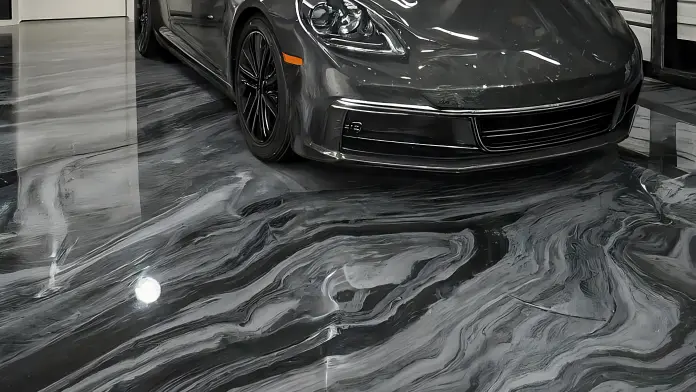
Epoxy Coating
$7 – $22
High durability and waterproofing; popular for garages and pool decks
Plain Concrete
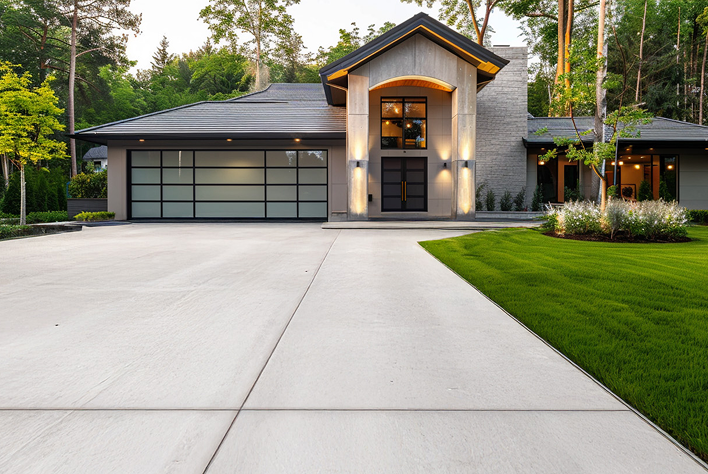
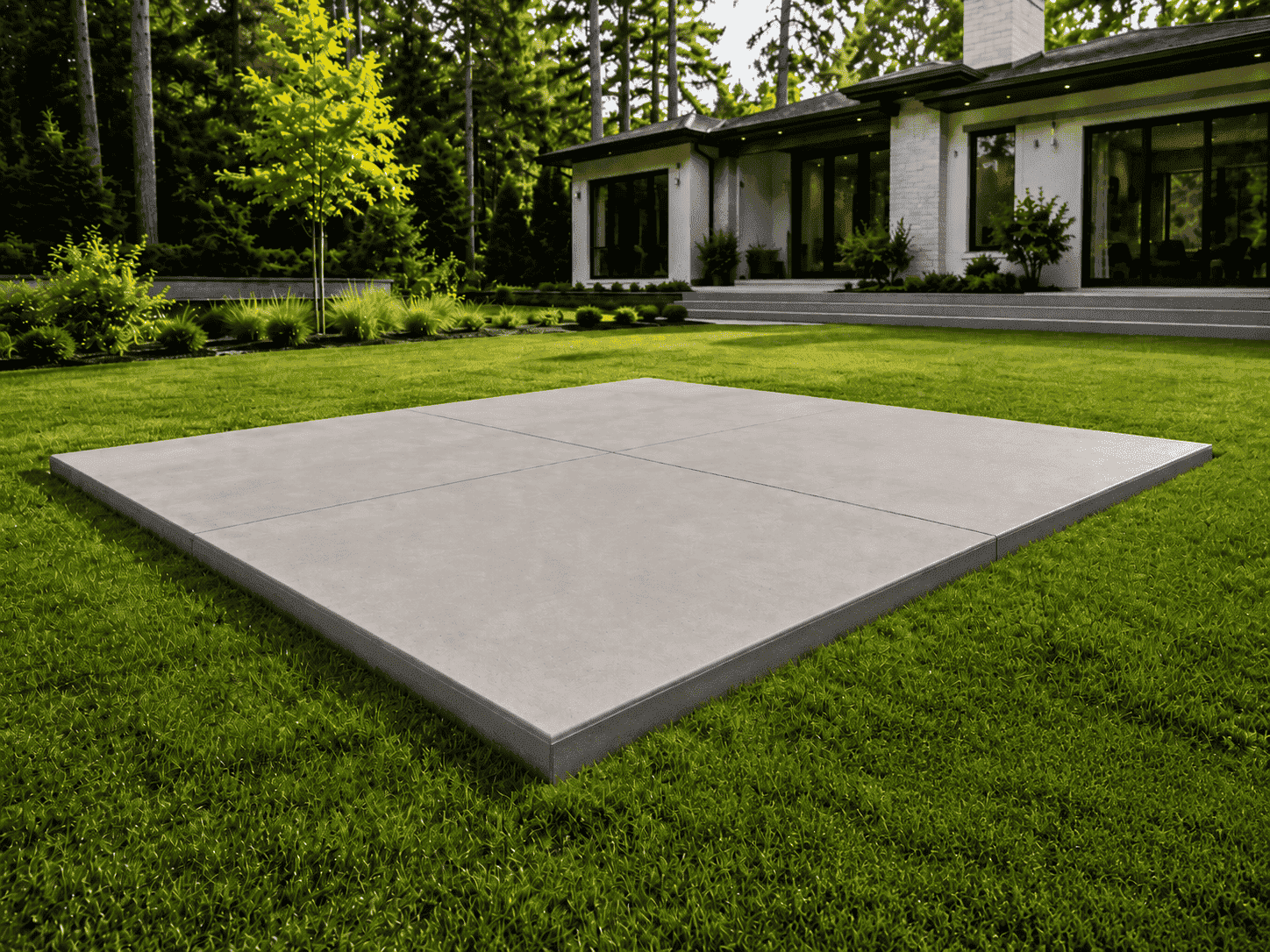
A plain concrete patio is the most affordable choice. It’s durable, quick to install, and easy to seal or paint later. Installers pour standard gray concrete and typically finish it with a broom to create a subtle, slip-resistant texture. It requires no specialized colorants or expensive stamping mats, keeping labor costs low. Some contractors include the broom finish at no extra charge on basic pours; others add $0.40 to $1.00 per square foot for the texture pass. This option is ideal for homeowners prioritizing function and durability over complex aesthetics.
Stamped Concrete
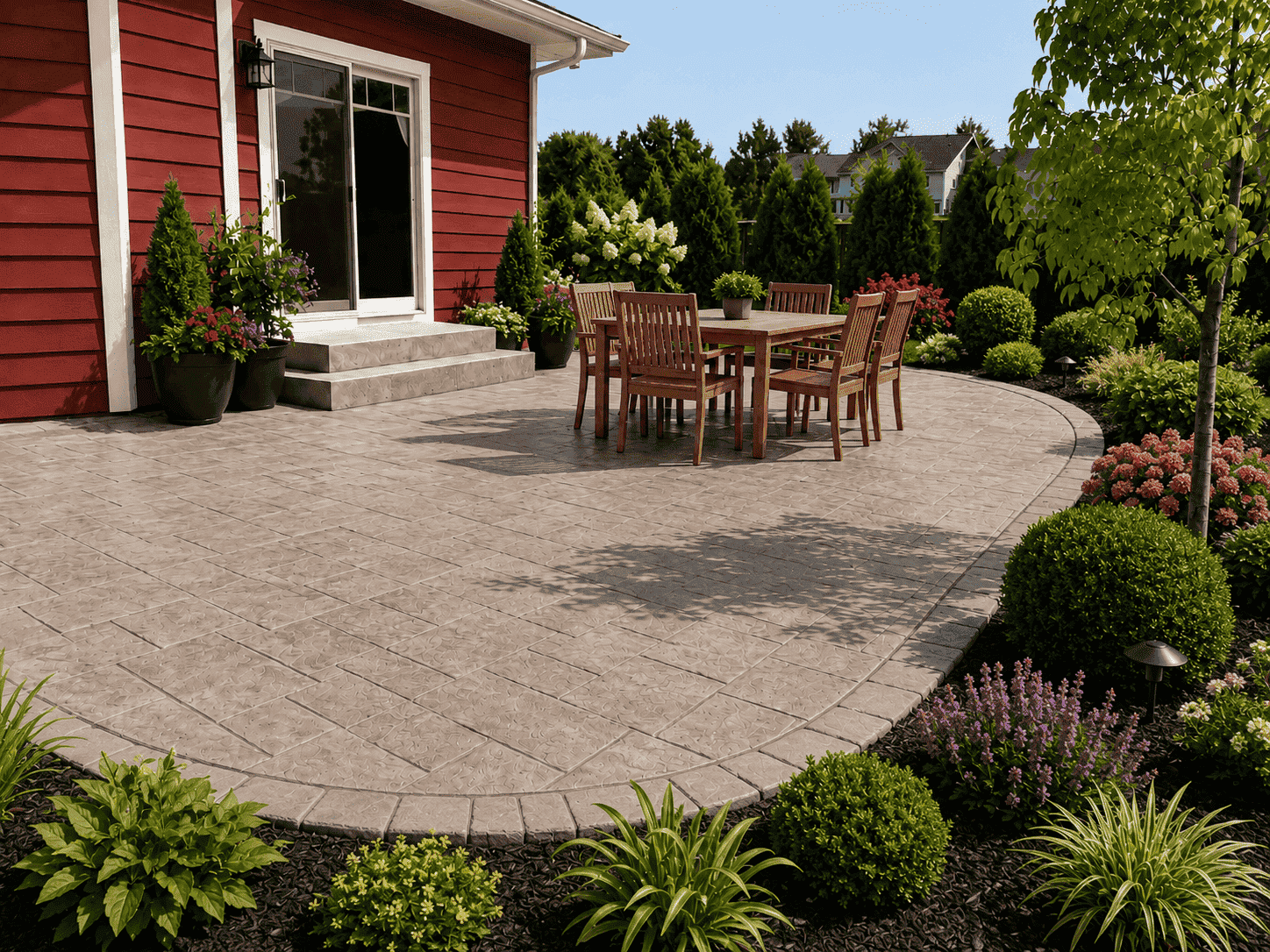
Stamped concrete involves pressing flexible polyurethane rubber mats into the wet concrete to create three-dimensional patterns. Installers can replicate the look of cobblestone, slate, flagstone, or even wood planks. The technique requires skill, timing, and specialized tools, which is why labor costs are higher. Expect to pay $9–$30 per square foot, with the upper range reflecting complex multi-color designs with border accents.
Stained and Colored Concrete
Staining adds color without sacrificing the inherent strength of the slab. Acid stains react chemically with the concrete to create rich, variegated earth tones that won't peel or chip over time. Water-based stains deliver a wider color palette with more uniform coverage. For a new slab, budget $8–$25 per square foot all-in. For an existing patio you want to refresh, staining alone costs $3–$15 per square foot — often a much cheaper alternative to replacement.
Exposed Aggregate
Exposed aggregate is made by washing the top layer of wet concrete away to reveal the pebbles, stones, or shells mixed into the cement. The result is an exceptionally durable, naturally textured, slip-resistant surface with a distinctive look that fits well in garden and pool settings. Costs range from $7–$18 per square foot, depending on the aggregate mix and the complexity of the exposure process.
Decorative and Custom Finishes
For a truly custom look, contractors can combine multiple finishing techniques. This might include a base color with a contrasting stained border, or a combination of stamping and exposed aggregate. These custom solutions require good planning and can increase patio costs by over $30 per square foot.
Other Key Factors That Add to the Cost
The price range for concrete patios is wide, and the gap between a $700 slab and a $10,000 showpiece isn't just about materials. Here's what you should consider.
Labor and Installation Costs
Labor typically accounts for 40–50% of total project costs. Concrete patio contractors generally charge $50–$75 per hour, which works out to roughly $2–$18 per square foot for the installation itself, depending on complexity. A basic rectangular slab is straightforward to install; curved edges, multiple levels, or integrated steps require significantly more time and skill.
Concrete Thickness and Reinforcement
The minimum thickness for a residential patio is 4 inches, which meets building code requirements in most areas. If you plan to put heavy items on the slab (a hot tub, outdoor kitchen, or fire pit), plan at least 6 inches. That extra 2 inches requires roughly 50% more concrete and adds $2–$4 per square foot to your bill. Steel rebar or wire mesh reinforcement adds another $1–$3 per square foot but is strongly recommended — it significantly reduces cracking over time and extends the slab's lifespan.
Type and Quality of Materials
A standard residential mix using Portland cement is cheaper; high-strength mixes with additives for freeze-thaw resistance or fiber reinforcement cost more. The concrete itself runs $125–$175 per cubic yard, and a typical 400-square-foot patio needs about 5–6 cubic yards. Materials typically account for 40–50% of the total project budget.
Finish and Design Complexity
Simple rectangular shapes are the cheapest to form and pour. Every curve, step, or inset design element requires customization, which adds labor time. Adding a decorative border in a contrasting color or pattern adds $3–$5 per linear foot. Multiple colors require separate pours or application steps, each adding cost. The more customized your solution, the higher your budget.
Site Preparation and Accessibility
A flat, accessible backyard is the best-case scenario for pricing. If your yard has a significant slope, the contractor may need to excavate, grade, or compact the sub-base before any concrete is poured — work that can add $500–$2,000 or more. If access is limited (narrow gates, obstructed pathways), ready-mix concrete may need to be pumped rather than chuted, which adds equipment rental costs. Demolishing and hauling away an existing patio adds $1–$5 per square foot.
Geographic Location
Labor rates vary by region. Urban markets in the Northeast, West Coast, and parts of the Midwest have higher wages and material costs than rural areas in the South or Great Plains. As a general guide, expect to pay 15–30% above national averages in high-cost metros and 10–20% below in lower-cost regions. Always get at least three local quotes to understand what the market looks like in your area.
Additional and Optional Costs: The Extras That Add Up
Once the basic slab is in place, there are several add-ons worth budgeting for:
Add-On
Estimated Cost
Concrete sealing
$3 – $5 per sq ft
Rebar/wire mesh reinforcement
$1 – $3 per sq ft
Grading and excavation
$500 – $2,000
Demolition of an existing patio
$1 – $5 per sq ft
Building permit
$50 – $400
Decorative border
$3 – $5 per linear ft
Pergola
$1,450 – $5,750
Outdoor lighting (per fixture)
$80 – $300
Fire pit
$325 – $2,000
Outdoor kitchen
$7,000 – $35,000
Retractable awning
$200 – $6,000
One often-overlooked cost: building permits. Many municipalities require a permit for patio installations, especially if the slab is attached to the house or exceeds a certain square footage. Costs run $50–$400. Skipping a required permit can create headaches when you sell. Always check with your local building department before work starts.
Concrete Patio Cost vs. Other Materials: Is Concrete Actually the Best Value?
When planning a backyard renovation, homeowners frequently compare poured concrete to alternatives. Understanding the advantages and limitations of each option will help you make a more confident decision. Let’s compare the most popular options.
Concrete vs. Pavers
Concrete pavers cost $4–$20 per square foot installed, making them comparable to plain concrete at the low end and mid-range stamped concrete at the top. The difference is flexibility: individual pavers can be replaced if one cracks, while a damaged concrete slab usually requires patching or full resurfacing. Pavers also offer more design variety without the labor-intensive formwork. However, plain poured concrete is almost always cheaper for a basic patio, and stamped concrete can rival the look of premium pavers at a lower cost.
Concrete vs. Wood Decks
A wood deck runs $15–$40 per square foot installed — significantly more than plain concrete and competitive with high-end stamped designs. Wood requires annual maintenance (sealing, staining, or painting), and even pressure-treated lumber typically requires significant maintenance after 15–20 years, with a full lifespan of 25–40 years under proper care.
Concrete, by contrast, can last 25–50 years with minimal upkeep. From a financial perspective, concrete wins on both upfront cost and long-term value.
Concrete vs. Natural Stone
Natural stone (flagstone, travertine, bluestone) delivers stunning results but at a premium level: expect $15–$30+ per square foot installed, with rare stones pushing higher. Stone is durable and ages beautifully, but installation is more labor-intensive, and the material cost is hard to control. Stamped concrete can convincingly mimic stone patterns at roughly half the price, which is why it's so popular among homeowners who want the premium look at a reasonable price.
DIY vs. Professional Installation: What's the Real Cost Difference?
Approach
Average Cost
Best For
Full DIY
$2 – $6 per sq ft (materials only)
Experienced builders; small projects under 100 sq ft
Partial DIY (you prepare, pro pours)
$4 – $10 per sq ft
Homeowners willing to do excavation and cleanup
Full Professional
$4 – $30 per sq ft
Most homeowners; any decorative finish
DIY Concrete Patio Costs
On paper, doing it yourself can save 40–60% on labor. But concrete work has an unforgiving learning curve. You're racing against the clock once the mix is ready, and mistakes — improper grading, poor formwork, uneven pour — can mean a cracked or unlevel slab within a few years. DIY makes the most sense for experienced builders handling small, simple slabs.
A practical middle ground: do the site prep yourself (excavation, gravel base, tamping) and hire a professional for the pour and finish. This can reduce labor costs meaningfully while keeping the technically demanding work in experienced hands.
Hiring a Contractor: What to Expect
A reputable contractor brings a crew, laser levels, power trowels, and years of experience. The process includes excavation, base compaction, forming, pouring, finishing, and cleanup. You’re not just paying for muscle; you’re paying for the expertise to slope the slab correctly (1/8″ per foot away from the house) and to cut control joints at the right time so cracks form where you can’t see them. Professionals also handle the logistics of ordering the right mix, scheduling the mixing trucks, and pulling any necessary local building permits.
Pros and Cons of Each Option
✅ Lowest cost if done correctly
❌ High risk of errors; poor results can be expensive to fix
❌ Not practical for decorative finishes
✅ Meaningful savings on labor
✅ You maintain quality control over prep work
❌ Requires coordination between your schedule and the pro's
✅ Best results, especially for decorative finishes
✅ Typically warrantied work
❌ Higher upfront cost
How to Save Money on a Concrete Patio Without Compromising on Quality
Keep the shape simple. Rectangular or square patios cost less to form and pour than curved or irregular shapes. Every custom edge requires additional formwork time.
Go plain, then upgrade later. Pour a plain slab now and have it stained or stamped later when the budget allows. Acid staining an existing slab costs $3–$15 per square foot — significantly less than a full decorative pour.
Do your own prep work. Excavating the area, removing sod, adding and compacting the gravel base, and cleaning up afterward are tasks most capable homeowners can handle. This can save several hundred dollars on larger projects.
Book in fall or winter. Concrete contractors are slower in the off-season and may offer discounts of 10–20% to keep crews busy. If you're in a climate where pouring is still feasible in cooler months, this is real money saved.
Get at least three quotes. Pricing varies more than most people expect. A spread of $1,000–$2,000 between quotes on a mid-size patio is common. Don't automatically choose the lowest — understand why it's lower.
Skip the outdoor kitchen for now. Add-ons like kitchens, fire pits, and pergolas are much easier to add to an existing slab than to build from scratch. Pour the slab sized for your eventual vision, then phase the enhancements over time.
Resurface instead of replacing. If you have an existing patio that's structurally sound but cosmetically tired, resurfacing costs just $3–$10 per square foot — a fraction of replacement cost.
Maintenance and Long-Term Costs: What Concrete Ownership Really Looks Like
One of concrete's biggest advantages is its low maintenance needs compared to wood decks or pavers. But low maintenance doesn't mean zero maintenance.
Maintenance Task
Frequency
Average Cost
Cleaning/pressure washing
Annually
$100 – $300
Resealing
Every 3–5 years
$3 – $5 per sq ft
Crack repair (minor)
As needed
$100 – $300
Resurfacing (cosmetic refresh)
Every 10–15 years
$3 – $10 per sq ft
Full replacement
25–50 years (if needed)
$4 – $30 per sq ft
A well-maintained concrete patio can last 25–50 years with minimal intervention. Sealing every 3–5 years is the single most impactful maintenance task — it blocks moisture intrusion, prevents staining, and is especially critical in climates with hard freezes. It also extends surface life and maintains appearance over the long term.
Final Thoughts
A concrete patio is one of the most practical outdoor investments you can make — durable, versatile, low-maintenance, and broadly appealing to future buyers. It's far more affordable than decks, stone, or pavers. The finish type and size you choose will define most of your budget, so lock those decisions in before requesting contractor quotes.
If you're ready to move forward, HomeBuddy connects you with pre-screened, vetted local contractors who specialize in concrete work — so you can compare real quotes and make a confident decision without the usual guesswork.
Frequently Asked Questions
Is a concrete patio cheaper than a deck?
Yes, in most cases. A basic concrete slab is usually half to one-third the price of a comparable deck. Concrete also lasts longer and requires less maintenance, giving it better long-term value in most situations.
How thick should a concrete patio be?
For standard residential use, 4 inches is the minimum and the standard for most patios. If you plan to place heavy loads on the slab (hot tub, outdoor kitchen, large planters), increase it to 6 inches.
How long does a concrete patio last?
A properly installed, well-maintained concrete patio can last 25–50 years. Factors that shorten lifespan include poor sub-base preparation, inadequate thickness, skipping reinforcement, infrequent sealing, and climate conditions. In cold climates, using air-entrained concrete — which contains microscopic air bubbles that allow it to expand and contract with freeze-thaw cycles — significantly reduces surface damage.
Does a concrete patio add value to a home?
Yes. A well-designed concrete patio delivers an estimated ROI of 50–90%. High-quality finishes like stamped or stained concrete, combined with good design, can improve ROI. In warmer climates where outdoor spaces get year-round use, ROI tends to be stronger than in colder regions. On average, a new patio can add 8–10% to your home's value and may help your home sell more quickly in competitive markets.


)