

How Much Does Window Replacement Cost in Denver in 2026?

Drafty windows aren't just annoying in Denver's climate — failed seals, fogged panes, and single-pane originals show up directly on your heating and cooling bill.

What you'll pay to fix that depends on four things: how many windows, the frame material, pocket vs. full-frame install, and the glass package. Whole-home jobs in Denver typically land between $6,000 and $15,000, but the cleanest way to size up a quote is per window.

On average, Denver homeowners pay per window installed:

$500 - $1,200

    Author image Brian Birnbaum Author

    Updated:

    Key Points

    • Per window installed: $500–$1,200 in the Denver metro; whole-home jobs typically run $6,000–$15,000.
    • Our recent Denver data: the median project landed near $9,600, and about one in three topped $20,000.
    • Why quotes vary so much: pocket vs. full-frame replacement can shift the same job by 40–80%, and product-only vs. installed adds $300–$600 per window.
    • 2026 rules: Colorado's new window standard is a point-of-sale rule on sellers — not a fine on homeowners. Denver's 2022 code requires a U-factor of 0.27 or lower.
    • No federal credit in 2026: the 25C credit for windows expired December 31, 2025. Plan the payoff around energy savings and comfort, not rebates.

    Denver Window Replacement Cost at a Glance

    Two views of the same market: per-window installed cost by frame material, and total project cost by window count. "Installed" means product plus labor on a standard-sized window in a standard opening — not bare product off a shelf, and not a custom shape.

    • Cost per window installed, by material

      Material Installed cost per window
      Entry vinyl (pocket replacement)$350 – $650
      Mid-range vinyl$600 – $1,100
      Premium / branded vinyl, full-frame$1,200 – $2,100
      Fiberglass / composite$700 – $1,500
      Wood$800 – $1,500
      Aluminum$400 – $1,000
    • Total project cost, by window count

      Project sizeTypical total installed
      3 – 5 windows$2,500 – $6,000
      8 – 12 windows$6,000 – $15,000
      15 – 20 windows$12,000 – $35,000

      Across our recent Denver projects, the typical job landed around $9,600, with most falling between roughly $4,800 and $27,400 — and about one in three projects topped $20,000, driven by larger or premium installs.

      Quick cross-check: $9,600 spread across a typical 8–12 windows works out to roughly $800–$1,200 per window, which lines up with Table A. If your quote sits well outside both tables in the same direction, ask what's included — or excluded.


    Why Window Estimates Vary So Much (and How to Read Your Quote)

    Pull three Denver quotes and you'll likely see $600 a window, $1,400 a window, and $2,200 a window — for what sounds like the same job. All three can be honest. They're measuring different things.

    Four reasons the same house gets wildly different numbers:

    • Product vs. installed. One quote is the window off the truck. The next includes labor, flashing, caulk, interior trim, and haul-away. That gap alone can be $300–$600 per opening.

    • Pocket vs. full-frame. A pocket (insert) replacement drops a new window into your existing frame and trim — fast and cheap. A full-frame tear-out removes everything down to the studs and rebuilds with new flashing and sill pan. Full-frame typically costs 40–80% more per opening, and it's the right call when frames are rotted, out of square, or never flashed correctly.

    • Per window vs. per project. "$650 a window" sounds great until you learn it's a 12-window minimum with a separate trip charge for anything under that.

    • Size and style mix. A 36-inch double-hung and a 6-foot picture window are both "one window" on a line item. Bay, bow, and custom shapes can run 2–3× a standard double-hung.

    The 4-question checklist to compare quotes apples to apples

    Before you sign anything, get a yes or no on each of these in writing:

    • Per window or per project? If per window, confirm the minimum count and whether the price holds for every opening or just the standard ones.

    • Installed or product-only? Installed should mean product, labor, flashing, sealant, and basic interior trim — not just the window itself.

    • Pocket or full-frame? Two quotes can't be compared until you know this. Ask which one the bid assumes and why.

    • What's included beyond the window? Specifically: removal of old windows, disposal, the permit (if required), exterior caulk, and interior trim repair. Any "no" here is a future line-item charge.

    Screenshot those four. Any contractor worth hiring will answer all four without flinching — and the answers will tell you which quote is actually the cheapest. For broader context, see our guide on how window pricing works in general.


    What Drives Your Price in Denver

    • Frame material. Vinyl is the volume choice and the cheapest path to code-compliant windows — our vinyl replacement guide breaks down the tiers. Fiberglass and composite cost more but handle Denver's temperature swings well. Wood looks best on older homes but needs maintenance. Aluminum is cheap and a poor insulator — fine for shops, weak for living spaces.

    • Glass package. Double-pane with Low-E and argon is the Denver default. Triple-pane adds insulation and sound dampening for 10–15% more. See our deep dives on double-pane and triple-pane.

    • Style and size. Double-hungs and sliders are baseline. Casements, awnings, bays, and large picture windows cost more — sometimes substantially more.

    • Window count. More windows on one job lowers the per-window cost; mobilization, disposal, and crew time get spread out.

    • Installation labor. Figure $150–$320 per window for labor alone in the Denver metro, depending on access, height, and pocket vs. full-frame.

    Permits, Removal, and Other Add-On Costs

    Denver building permits for windows run $35–$300, scaled to project valuation. Same-size pocket replacements often don't require one — but confirm with Denver Community Planning and Development or your contractor before you assume.

    Line items that often show up separately:

    • Old-window removal and disposal (especially on pre-1978 homes, where lead paint protocols apply)

    • Weatherproofing, flashing, and sill pans on full-frame jobs

    • Interior and exterior trim repair or replacement

    • Sales tax on materials — Colorado state and Denver combined run about 7.81%

    Denver labor runs roughly 11% above the national average, which is why a quote that looks high against a national chart can still be fair locally.


    Denver's Climate and the 2026 Energy Rules

    Denver sits at 5,280 feet in climate zone 5B, with UV exposure about 25% higher than at sea level. That makes Low-E coatings more than a checkbox — they protect floors and furniture from fading and cut summer heat gain. Altitude matters for the glass itself, too: insulated glass units sealed at sea level can bow or stress at 5,280 feet. Ask your contractor whether the units are altitude-rated (with capillary or breather tubes) before signing.

    On the rules: Colorado's HB 23-1161 originally required ENERGY STAR 7.0 (Northern Zone) windows by January 1, 2026. The state later found that the standard was impractical and amended it. As of January 1, 2026, windows sold in Colorado must instead meet alternative U-factor thresholds aligned with the 2024 IECC.

    Important detail: this is a point-of-sale rule on sellers and manufacturers, not a penalty on homeowners. You won't be fined for the windows in your home today. The law shapes what's legal to sell new.

    Denver's own 2022 energy code requires a U-factor of 0.27 or lower (0.25 above a defined glazing-area threshold). Historic homes may qualify for an exemption — check with the city if your house has a designation.

    Hail Damage and Window Insurance

    Denver sits in "Hail Alley," and hail is one of the most common reasons homeowners here replace windows. It's also one of the most under-claimed damages. Adjusters scope the broken glass and stop, missing cracked frame corners, dented aluminum cladding, broken seals between panes, and shredded screens — all of which fail later, after the claim has closed.

    Before any boarding or cleanup, photograph everything: glass, frame corners, exterior casing, screens, and surrounding siding. Document the storm date and hail size (1-inch, golf-ball, etc.). The National Weather Service publishes storm reports that adjusters take seriously.

    If the same storm hit your roof or siding, claim them together. Bundling is easier for the adjuster and usually produces a better outcome than separate claims spread over a year.

    Energy Savings, Rebates, and ROI in 2026

    Direct incentives for window replacement are thin in 2026.

    The federal 25C Energy Efficient Home Improvement Credit — which gave homeowners up to $600 a year for windowsexpired December 31, 2025. It's not available for 2026 projects. Only work completed by the end of 2025 can still be claimed on a 2025 return.

    Xcel Energy's current Colorado rebates target insulation, air sealing, and heat pumps — there is no dedicated Xcel rebate for windows themselves. Air-sealing work around window openings may qualify under a separate program, so ask your contractor to itemize that scope.

    The payoff on new windows in 2026 is mostly lower heating and cooling bills, better comfort, and less UV damage — not a check from the IRS or your utility. At resale, window replacement returns roughly 65–70% of cost on average. 


    How to Save on Window Replacement in Denver

    • Bundle multiple windows. Per-window cost drops noticeably once you cross 6–8 windows.

    • Phase if you need to. Start with failed seals, single-pane originals, and sun-beaten west-facing windows. Each phase carries its own mobilization and possibly its own permit.

    • Get at least three itemized, written quotes and read them line by line against the 4-question checklist above.

    • Ask about off-season pricing. Late fall and winter are slower for installers, and some will move on price.


    Frequently Asked Questions

    Do I need a permit to replace windows in Denver? 

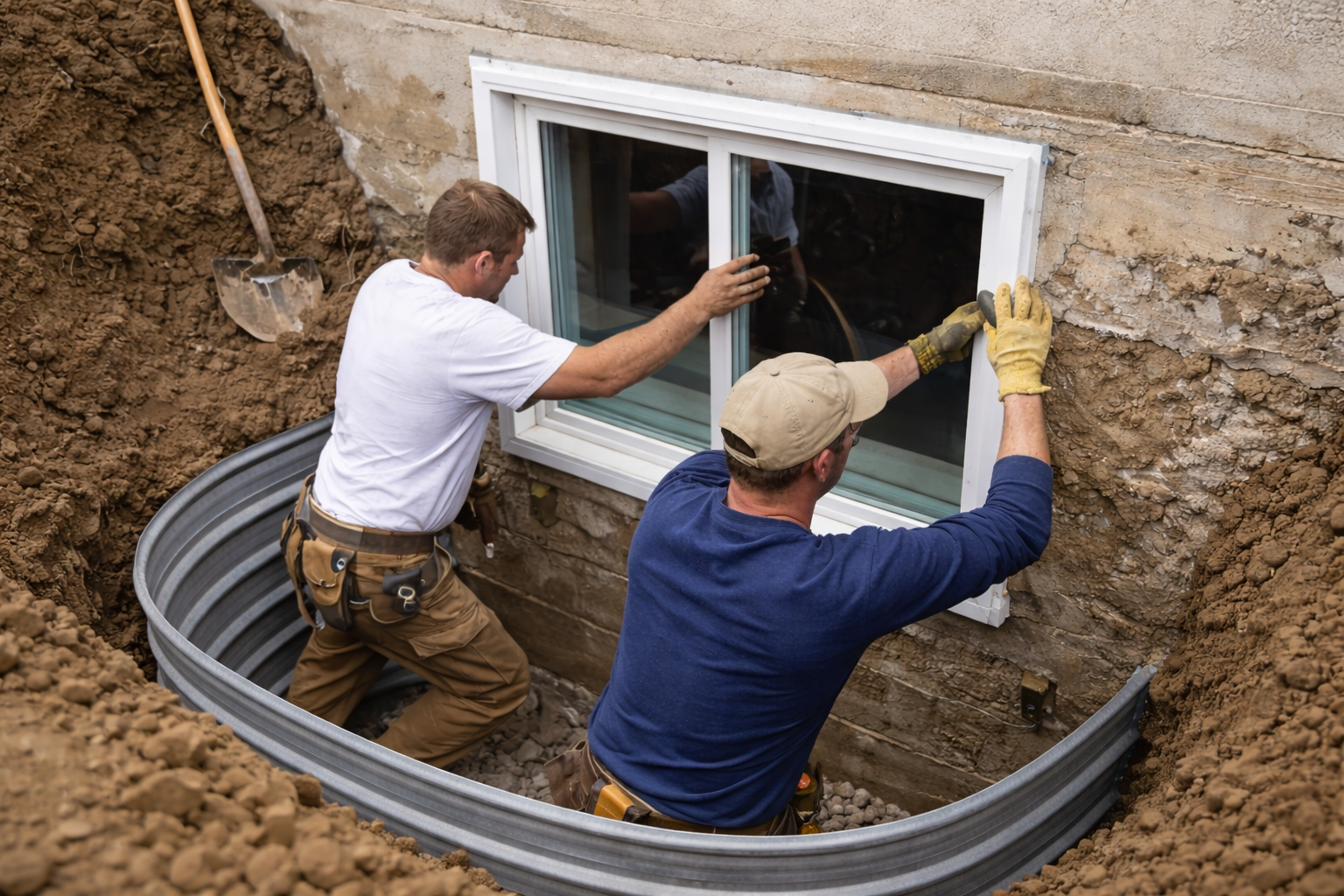
    A like-for-like, same-size swap into the existing opening usually does not require a permit. You do need one if you change the opening size, add a new window, or install an egress window. Permits run $35–$300 and are filed online through Denver Community Planning and Development.

    Is double-pane or triple-pane better for Denver? 

    For most Denver homes, double-pane with Low-E and argon meets the energy code at a lower cost and is the right pick. Triple-pane is worth the premium mainly for north-facing rooms, higher-elevation homes, or strong noise reduction — near I-25, for example.

    Can I replace just one window? 

    Yes. Replacing a single failed or hail-damaged window is a normal job for any installer. Bundling lowers the per-window cost, but you don't have to do the whole house at once.

    How long does window replacement take? 

    A single window takes 1–3 hours. A whole-home job of 10–15 windows takes 1–3 days. Custom-ordered windows add 4–8 weeks of lead time before installation begins.

    Is window replacement worth it in Denver? 

    New windows return roughly 65–70% of their cost at resale here and can cut heating and cooling use by about 15–25% versus old single-pane windows — plus the comfort gain and less UV fading indoors.


    Ready to compare apples-to-apples quotes from vetted Denver contractors? Find a local pro through HomeBuddy.

    Related Articles

    All Articles

    Introducing HomeBuddy AI! Get instant answers for any home project.

    Try it now